Automobility 2.0: Connected, Electric & Intelligent – A China Perspective
Category: GIA
Published: 2026-02-03
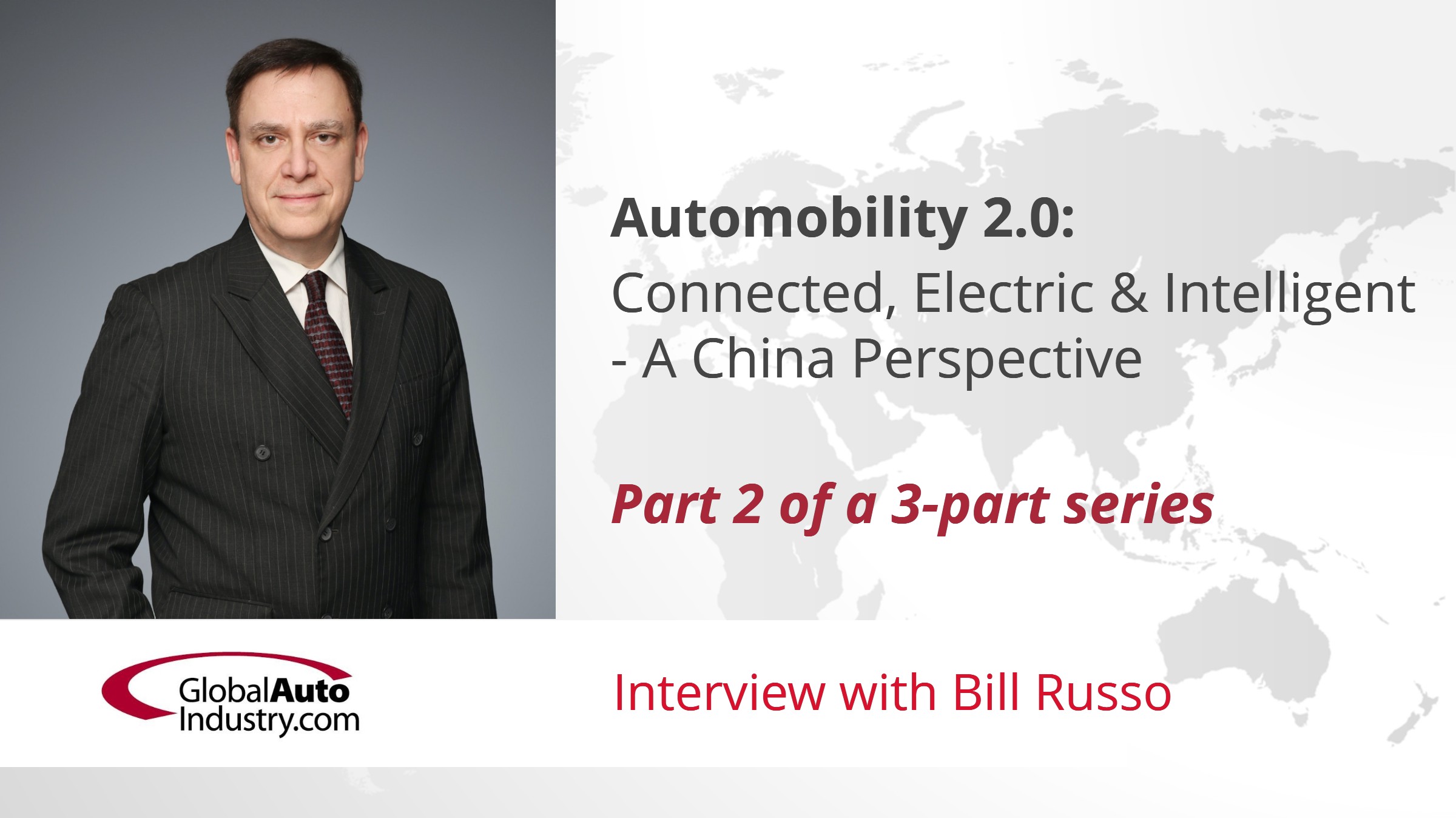
GlobalAutoIndustry.com’s latest Audio Interview “Automobility 2.0: Connected, Electric & Intelligent – A China Perspective” features Bill Russo. Bill is the Founder and CEO of Shanghai-based Automobility Limited, a strategy and investment advisory firm helping clients to create the future of mobility. His over four decades of experience includes 15 years as an automotive executive, including over two decades of experience in China and Asia. He has also worked 12 years in the electronics and information technology industries. Bill is also currently serving as the Chair of the Automotive Committee at the American Chamber of Commerce in Shanghai.
In the 17-minute Audio Interview, Mr. Russo discusses these questions:
- To ground the discussion, how do you define the Connected and Electric era—and what truly distinguishes Intelligent Connected Vehicles, or ICVs, from earlier generations of connected cars? And to press on that point, what specifically separates ICVs architecturally and functionally from the connected vehicles we saw in the last decade?
- What conditions enabled China to take such a commanding lead in Automobility 2.0? You often talk about “China Speed.” How did that way of operating accelerate development cycles compared with global OEMs?
- What is the Tier 0.5 concept, and why does it matter so much in the software-defined vehicle era?
- And how are OEMs adapting their organizations and vehicle architectures—from domain controllers to centralized computing—to integrate these Tier 0.5 players?
- How do connectivity, central compute, OTA capabilities, sensors, cloud platforms, and AI come together to define Intelligent Connected Vehicle performance?
- How have expectations shifted around UX, UI, OTA updates, ADAS performance, and digital ecosystem integration?
- Which capability gaps in the 2.0 era pointed directly toward the need for Automobility 3.0, and how did ICV infrastructure set the stage for what comes next?
Related posts: