Texas Faces Wastewater Challenge

Texas’ oil industry is approaching a critical point as the Permian Basin generates nearly 1 billion gallons of wastewater every day, raising concerns over the limited capacity available to dispose of it underground.
The wastewater, known as produced water, is a byproduct of oil and gas production and is typically injected into underground disposal wells. However, increased underground pressure linked to these wells has contributed to earthquakes and blowouts, prompting the industry to seek alternatives.
The growing disposal challenge could eventually constrain oil and gas production in the Permian Basin, one of the United States’ most important energy-producing regions. Industry representatives have urged Texas regulators to accelerate the approval of permits that would allow treated produced water to be reused or discharged under controlled conditions.
The Texas Commission on Environmental Quality (TCEQ) is developing regulatory frameworks for the reuse of treated produced water. The agency has accepted applications for permits to discharge treated wastewater into rivers since 2024, although no permits have been issued yet. A separate proposal would allow treated water to be used for irrigation and rangeland restoration.
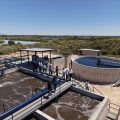
Meanwhile, companies are investing in treatment technologies. Texas Pacific Water Resources recently inaugurated a facility near Orla, in Reeves County, capable of treating up to 420,000 gallons of produced water per day. The plant uses freeze desalination to separate salts from the wastewater, allowing roughly half of the treated water to be recovered for reuse.
The technology, however, remains energy-intensive. The Orla facility requires approximately 5.5 megawatts of electricity to process 10,000 barrels of water per day, making treatment more expensive than conventional underground injection.
Researchers and environmental groups are also calling for additional studies before treated produced water is broadly introduced into rivers, soils or agricultural operations. Recent research has shown potential for reuse, but scientists emphasize that longer-term studies are still needed to evaluate environmental and water-quality impacts.
For Texas, the challenge is increasingly becoming a balance between sustaining oil production and developing a safe, economically viable system for managing the enormous volumes of wastewater generated by the industry.
Related posts: